Missed calls are the leads you never see
You were with a customer, on another line, or driving. The phone rang, it went to voicemail, and the person on the other end may simply have called the next name on the list. Nothing records that it happened. A bad ad at least shows up in a report. A missed call doesn’t.
How common is it? The figure you’ll see repeated everywhere — that small businesses miss 62% of their calls — traces back to one study. When 411 Locals monitored 85 businesses across 58 industries for 30 days, 37.8% of inbound calls were answered, 37.8% went to voicemail, and 24.3% got no response at all. It’s a small sample from 2016, so treat it as a sign that the problem is common, not as a measurement of yours. Yours is the number that matters, and you can work it out today.
Missed call cost: work out your own number
Three figures you already have, or can pull from your phone’s call log in a few minutes:
- A
- Calls you missed last month, from the log. Count unknown numbers only.
- B
- Of the calls you did answer from unknown numbers, the share that became paying work.
- C
- What an average first job or first order is worth to you, before any repeat business.
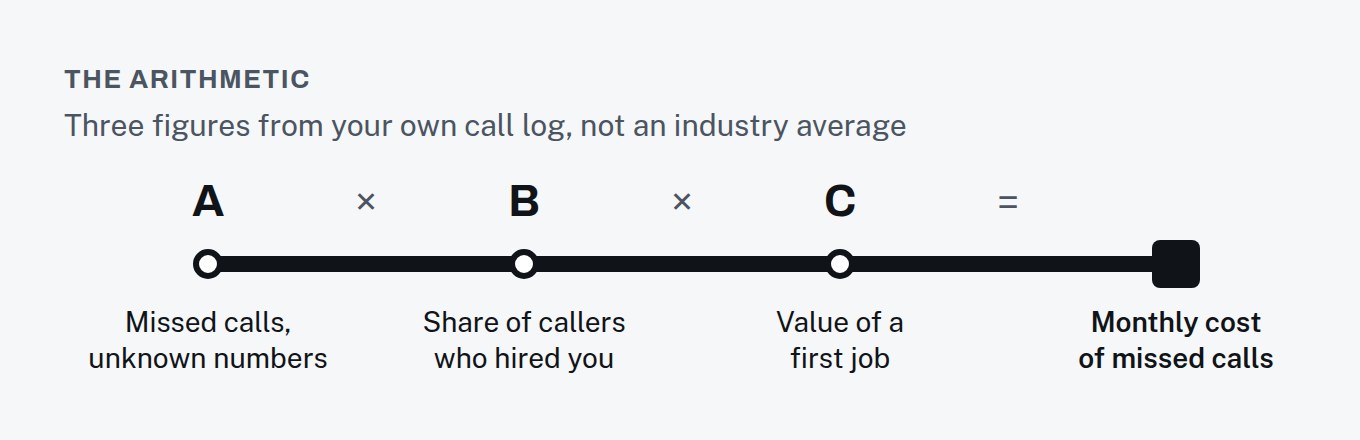
It’s a rough figure. Some of those callers would have rung back, and some were sales calls. But it’s your figure, and it’s usually enough to decide whether the rest of this notice matters to you. If the number is small, stop here — honestly.
Missed calls and response time: why the first hour decides it
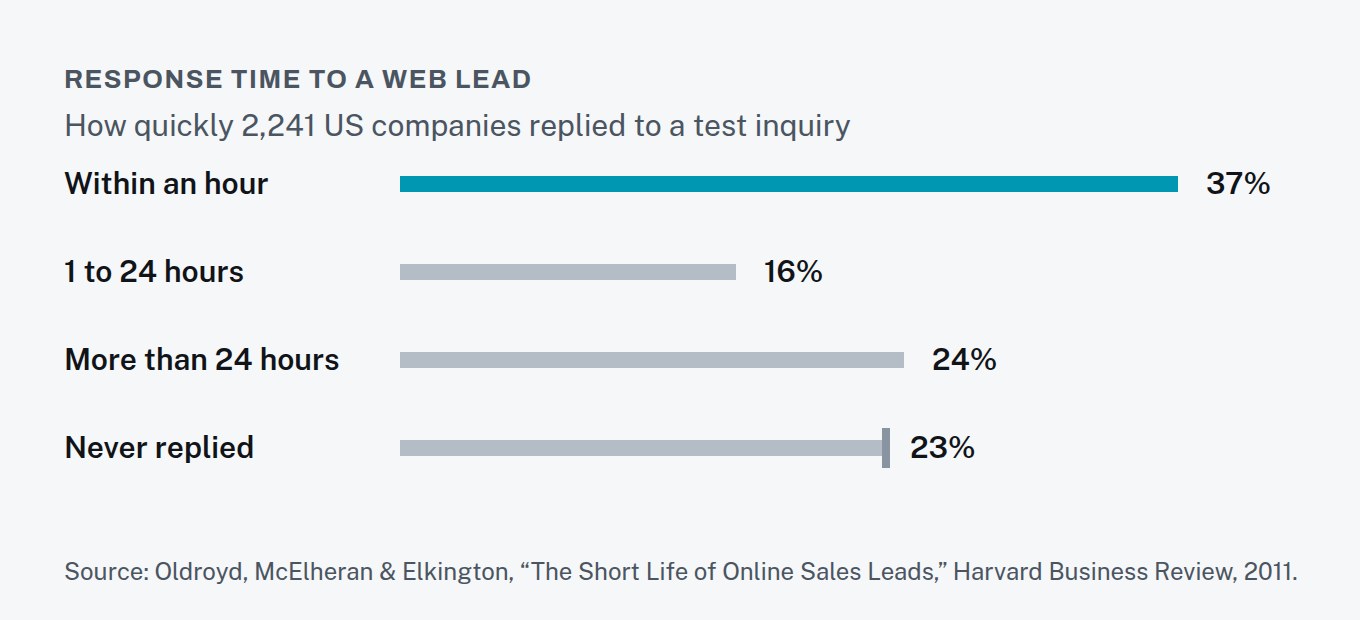
The best-known research on how fast leads go cold comes from a 2011 Harvard Business Review study. Its authors audited 2,241 US companies by sending each a test inquiry through its website. 37% replied within an hour. 23% never replied at all. Among those that replied within 30 days, the average response took 42 hours.
A second study by the same authors, covering 1.25 million leads, found that companies that tried to contact a lead within an hour were nearly seven times as likely to qualify it as those that waited even one hour longer — and more than 60 times as likely as those that waited a day or more.
Two honest caveats. These were web inquiries, not phone calls, and the research is from 2011. But a missed call is the fastest-cooling lead there is: the caller is on the phone right now, comparing you with whoever picks up next. If an hour’s delay matters for a web form, the next thirty seconds matter for a call.
Missed call text back: what it actually does
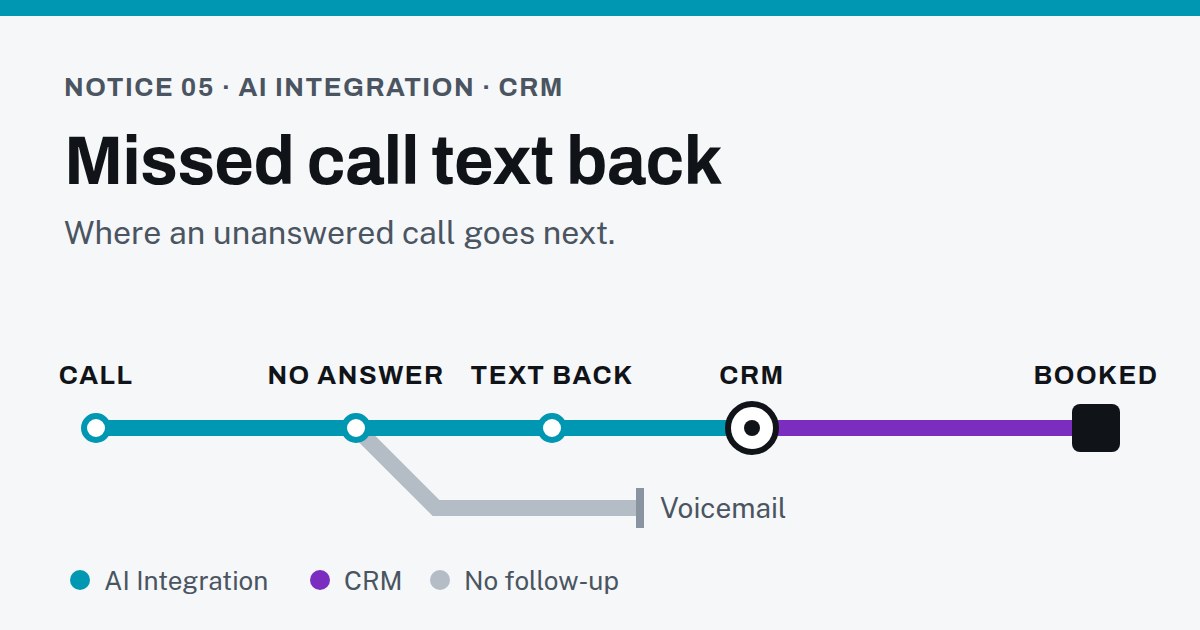
Missed call text back is a small piece of plumbing. When a call to your business number isn’t answered, the caller gets a text within seconds — in your words, from your number. Something like: “Sorry we missed you — this is Dana at Northside Upholstery. What can we help with?”
Three things happen. The caller knows a real business noticed them. They can answer by text while they’re still deciding, instead of moving to the next name. And the conversation lands in your CRM with the number, the time and what they said — so when you’re free, you’re replying to a lead, not guessing who called.
For businesses that want more than a text, the next step up is an AI that answers the call when you can’t and books straight into your calendar. Both are part of our AI Integration line, at different levels and different prices.
Missed call text back or AI phone answering: which level fits
Text-back and AI phone answering solve the same problem at different depths, and your call log tells you which one you need. Before choosing, sort last month’s missed calls by when they happened.
Text-back is usually enough when the missed calls cluster in short gaps — while you’re with a customer, at lunch, on a site visit — someone can reply within the hour, and callers mainly want to know a real person got their message. A text does that, and the conversation waits in your inbox until you’re free.
AI phone answering earns its higher price when the missed calls land after hours or at weekends, when there are too many to reply to by hand, or when callers usually want a straight answer or a booking on the spot. An AI that picks up, answers the common questions and books into your calendar means the caller is done before they’d have hung up.
Either way, three things have to be decided before anything is switched on: what the message or greeting says, in your words; what it must never promise; and when it hands the conversation back to a person. Those decisions matter more than the technology. A text-back that sounds like a robot, or an AI that makes promises you can’t keep, costs you the lead just as surely as silence.
Business text messaging rules: register your number first
Texts sent from a business system aren’t treated like texts from your personal phone. In the US, anyone sending SMS or MMS from an application over a standard 10-digit number must register for A2P 10DLC — the standard carriers use to make sure business texting is verified and consensual. Registration covers two things: who you are (the brand) and what you’ll send (the campaign, including how people opt in and out).
It’s paperwork, not a barrier, but it has to be done before text-back goes live.
When missed call text back isn’t worth it
- If nobody replies to the texts, it's just a politer way to lose the lead. The plumbing only works if someone answers eventually.
- If most of your callers are existing customers who'd ring back anyway, your number from the arithmetic will be small. Believe it.
- If nobody is calling in the first place, text-back won't fix that. That's a Google Ads or SEO question.
Missed call text back: where to start
Do the arithmetic first. If the number is worth acting on, text-back is the lighter of the two levels — it costs less than AI phone answering — and it’s included in the Scale CRM plan, or available on its own through AI Integration. Either way, it starts with the same free call — and we’ll tell you on that call if a smaller fix would do.